
news update
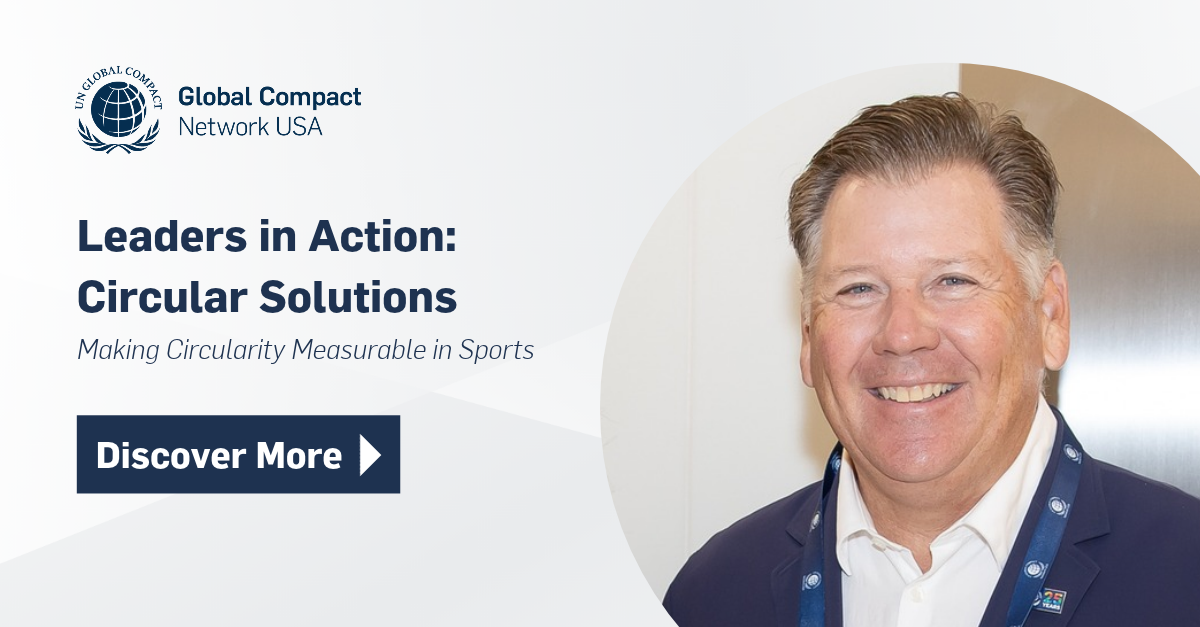
Leaders In Action: Circular Solutions | Making Circularity Measurable in Sports
Major sporting events generate millions of pounds of waste each year, increasing pressure on venues, leagues, sponsors, and organizers to reduce environmental impact and meet stakeholder expectations. Circularity offers a practical way to reduce costs, improve sustainability performance, and address these challenges—but success depends on systems that verify material outcomes and provide credible data to support sustainability claims.
After more than two decades in the recycling industry, J.T. Marburger saw a recurring challenge: companies were making ambitious sustainability commitments, but there was no reliable way to verify impact. To address this gap, he founded Circular Solutions. Today, the company helps organizations transform waste streams into verifiable circular outcomes, providing independent validation that materials are collected, processed, and diverted from landfill.
In this Leaders In Action piece, Marburger shares how circularity is reshaping the sports industry, why verification and transparency matter, and how sports organizations can leverage circular economy principles to create measurable environmental and business value.
1. What role can sport and global events play in advancing sustainability and creating lasting impact?
Sport has a unique ability to accelerate change because it combines visibility, scale, and operational complexity in a way few other environments can.
Major sporting events create real-world laboratories where sustainability strategies can be tested, measured, and improved. When hundreds of thousands of people gather in one place, organizations have an opportunity to evaluate what works, identify what doesn’t, and develop solutions that can be replicated elsewhere.
Through our work providing Circular OS™ recycling, landfill diversion, and recycled content integration software for some of the world’s largest sporting events, we identified a gap in the U.S. market: the need for a centralized technology platform connecting product sales, material recovery, and verified recycling outcomes.
Visibility across that supply chain is increasingly important as recycling infrastructure changes. NAPCOR’s latest PET recycling report covers 2024. Since January 2025, seven U.S. PET recycling facilities have announced full or partial closures. NAPCOR estimates these changes represent a net reduction of 24.5% in domestic PET recycling capacity, even after accounting for new facilities.
Our work at a recent global sporting event illustrates the value of addressing this gap. Across stadiums and fan festivals, Circular Solutions worked with venues to collect and centralize auditable documentation in Circular OS™. The platform extracted data from those records to verify beverage packaging recovery, document its movement through the recycling supply chain, and identify gaps in verification.
The value extends beyond the tournament. These findings can help venues strengthen recycling systems, improve reporting accuracy, and guide future events and everyday operations.
Sport has the power not only to inspire people but also to demonstrate practical solutions that drive lasting environmental progress. The greatest opportunity is to turn the visibility of a major event into better everyday practices—within venues, across supply chains, and in the communities that host them.
2. What are the primary goals or challenges organizations are looking to address when they engage with your team?
Over the last 21 years, I have worked with Coca-Cola, FIFA, the Olympics, Super Bowls, NCAA Championships, PGA events, and many of the world's leading brands. One consistent challenge remains: organizations know what materials are being collected, but they often have little visibility into what happens next.
Most sustainability reporting focuses on activity rather than outcomes. Organizations can report tons collected, but they frequently cannot verify where those materials were processed, whether they were actually recycled, or how much recycled content ultimately made its way back into manufacturing.
Organizations engage Circular Solutions because they need greater transparency, accountability, and confidence in their sustainability outcomes. Our platform consolidates the circular supply chain into a single system of record, providing verified documentation of recycling, landfill diversion, and recycled-content integration.
As sustainability commitments become more ambitious and reporting expectations continue to evolve, organizations are looking for something very simple: confidence. They want confidence that what they are reporting is accurate, defensible, and creating meaningful environmental impact.
3. What have you learned about driving engagement and alignment across complex ecosystems?
One of the biggest lessons I've learned is that every participant in the circular economy measures success differently. Venue operators, sponsors, waste haulers, recyclers, manufacturers, and community partners all play critical roles, but often have different priorities and performance metrics.
Successful circularity programs begin with a shared understanding of goals, responsibilities, and measurement. The breakthrough occurs when everyone begins working from the same information and measuring the same outcomes. Transparency creates trust, and trust creates collaboration. In many ways, building a circular economy is the ultimate team sport.
4. What partnerships or collaborations have been most critical to your work?
Our work would not be possible without partnerships. Circularity requires coordination across the entire value chain—from event organizers and sponsors to waste haulers, recyclers, processors, manufacturers, and local communities.
Rolling Green illustrates the opportunity to connect that operational work with fan participation. Its digital platforms and campaigns invite fans to choose sustainable actions, build their scores over time, and earn rewards through an experience connected to the teams and events they already care about. Combining that approach with Circular Solutions’ independent verification of recycling outcomes gives brands an opportunity to engage fans and support their sustainability stories with documented results.
The complementary roles matter. Rolling Green captures participation through its platform; Circular Solutions verifies what happens to collected materials through the recycling chain. Together, those capabilities can support programs that continue across seasons and give partners a clearer understanding of both engagement and material outcomes.
Working on some of the world’s largest sporting events has reinforced an important lesson: sustainability initiatives are most successful when they are integrated into operational planning from the beginning. Bringing collection, recycling verification, and fan engagement into that planning helps partners build programs that can improve over time and extend beyond a single event.
5. How do efforts like these contribute to broader global sustainability progress?
Major sporting events bring together stakeholders that may not otherwise collaborate and create opportunities to put circular economy solutions into practice at a meaningful scale. Their lasting contribution is what continues after the event: stronger partnerships, better infrastructure, and operating practices that other organizations can adopt.
Throughout my career, I have often used the phrase “Operational Reality.” For me, the next chapter of circularity in sports is making it part of everyday decisions—from the packaging a venue purchases to how materials are collected and where they go next.
Over the next several years, success would mean more venues designing these systems before the first ticket is sold, more sponsors helping create demand for recovered materials, and more leagues carrying successful practices across their schedules. It would also mean giving fans clear, consistent ways to participate wherever they attend an event.
No single event will solve global sustainability challenges. But sport can help build systems that last beyond the final whistle. That is the future I want to see: every season building on the last, with circularity becoming an expected part of how the industry operates.
As expectations and opportunities around sustainability continue to evolve, organizations are being asked to move beyond commitments and demonstrate measurable progress. For sports organizations, that means creating systems that not only reduce waste but also verify outcomes, build stakeholder trust, and generate insights that can drive continuous improvement. Circularity is no longer an academic exercise; it is a business imperative that strengthens resilience, improves operational performance, and reinforces organizational credibility.
The sports industry has long been a platform for innovation and influence. By embracing transparent, data-driven approaches to circularity, leagues, venues, sponsors, and event organizers have an opportunity to showcase what effective sustainability leadership looks like in practice.
The businesses best positioned for the future are embedding sustainability into the way they operate, creating resilience, driving performance, and creating long-term value. Explore Network USA's programming to gain resources, peer learning, and practical guidance to help your organization unlock new opportunities and drive measurable results.

